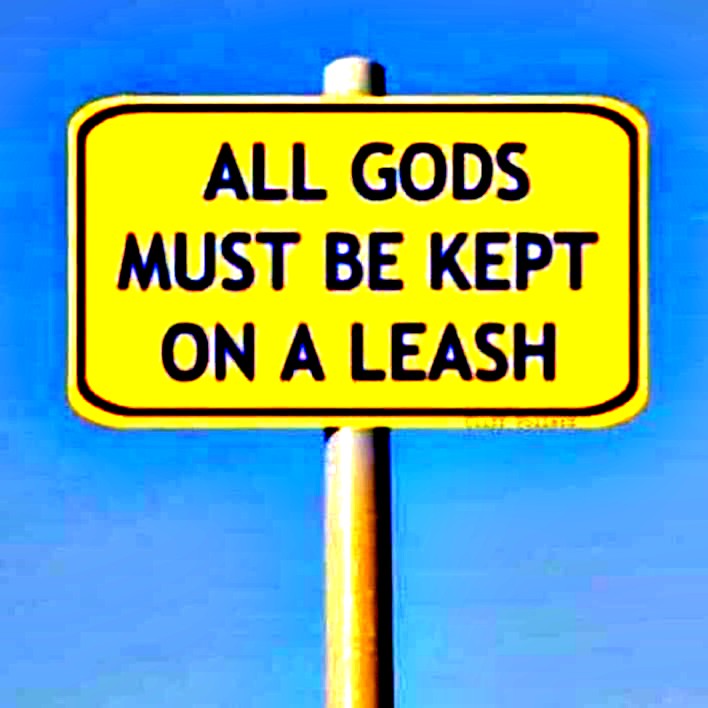

God, law and dominion
Sending emails/private messages avoids honest debate. If you have a question, write in the comments section of my blog or Secular First at Facebook. Otherwise, expect me to ignore your protests. Don’t make threats, get on with it.
If you cannot handle protest, you might live happier in an hybrid Islamic supremacist state like Pakistan or in a theocracy like Iran. Cultures opposed to secularism, freedom of conscience and expression, equality before the law and equal opportunities [baseline fundamental human rights are a human obligation] are inferior.
The offending paragraph from my last blog:
Retarded social evolution
“They were all transmitters of Islamic Revivalism and products of an inferior part of Muslim society Akbar the Great, the East India Company and Raj failed to modernise. In the scheme of things, given what we see in Afghanistan, Bangladesh and Pakistan, maybe Indian Hindus should stop complaining about our nightmarish ancestors and thank their lucky Siyar Singhi.”
Why do I focus on South Asia?
Colonialism is neither desirable nor right for the twenty-first century. Organised race and religious supremacy are unacceptable in modern secular states. Britain is not a secular state. My ‘extremist views’ seek to reawaken ideas of secularism and 🇬🇧 nationalism.
Calphate, colonialism and empires were the ways of the old world and every Indo Persian dynasty—what have Muslims got to complain about? I am very interested in South Asian Islam, mainly because many British South Asian Muslims are fundamentalists, hostile and troublesome.
I am not an armchair or casual observer, I often go see for myself. In Britain, South Asian [Ahmadiyya?], Buddhists, Christians, Hindus, Shiites and Sikhs seem cool. A secular Muslim reform movement is growing in England.
In my last blog, I refer to Akbar the Great. It is obvious I consider Akbar in a positive light. Even though he expanded his kingdom by the sword, he at least attempted to create plurality and religious tolerance. He faced rebellion and takfir. Islamists refused to change, but learning around Muslim empires would eventually defeat them.
That is my point—highlighting cultural retardation and Sharia’s limitations and extreme structural defemiciencies for the common good of humankind from a social antbrop8logical standpoint is the game: retarded.
God was law—even in Britain
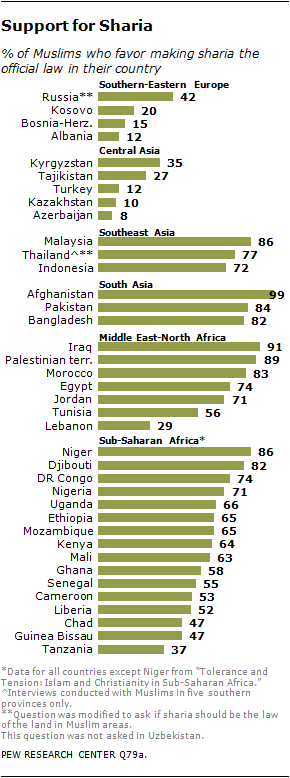
‘Secularism and One Law’ should be India’s preoccupation. I oppose ethnic and religious supremacy, but would such aspirations receive a fair hearing from Hindu nationalists? What if Bangladesh and Pakistan did not exist, would India have a secular constitution? Most Muslims in South and Southeast Asia voice support for Sharia state (Islamic supremacy), but India’s Muslim minority support Composite Nationalism and secularism—for the moment.
In the ancient world, religious authority seldom sought agreement from subjects and vassals. Our modern ideas of legitimate authority have no place in debates about the past. Ancient authors and proven facts chronicle mankind’s psyche and nature from the fifth century Before Christ (BC).
Our ancestors were too often enslaved and uneducated products of brutality and perpetual hardship in theocratic states—by design. Basic needs, order and security were derivatives of oppression in Christian and Muslim dominions. Patriarchal orders imposed God’s sovereignty and laws. Organised religion was unnecessary because faith imposition and religious law were part of absolutist and hybrid states. Like too many Muslim states in modern times.
Competition between groups for resources, territory and expansionism were natural consequences of human development that created dominions. To create authority, stability and security in dominions, common factors were currency, law, measuring time, spirituality and delivery of very basic needs—Christian clergy were often corrupt, gluttons and predators.
When did religious sovereign states replace Gods’ dominions and law?
We derive the word “sovereignty” from the Latin superanus. ‘Super’ as a prefix requires no translation. Anus (feminine) can also mean ‘position’ or ‘possession’. Throughout antiquity until 1924, agreement rarely created dominion. Domination, slavery and subjugation created absolutism, religious sovereignty and imposed God’s laws on populations born in religious empires and states.
British opposition to the “Bishop of Rome, Vicar of Jesus Christ, Successor of the Prince of the Apostles, Supreme Pontiff of the Universal Church, Primate of Italy, Archbishop and Metropolitan of the Roman Province, Sovereign of the State of Vatican City, Servant of the Servants of God” is legendary. Unlike its early rivals, the British Empire favoured structural secularism—education, pluralism and religious tolerance.
Gods and God’s laws were and still are dominant forces in some cultures. The dysfunction caused by God’s laws is obvious. Christian and Islamic dominions dominated East and West for much of disciplined historiography—statim finis.
When did Gods’ laws morph modern religions?
Ludwig Feuerbach in Lectures on the Essence of Religion (1848):
“Christianity set itself the goal of fulfilling man’s unattainable desires, but for that very reason ignored his attainable desires. By promising man eternal life, it deprived him of temporal life, by teaching him to trust in God’s help it took away his trust in his own powers; by giving him faith in a better life in heaven, it destroyed his faith in a better life on earth and his striving to attain such a life. Christianity gave man what his imagination desires, but for that very reason failed to give him what he really and truly desires.”
The origins of modern political philosophies are often retellings of thinking found in ancient Egypt, Greece, Rome and Persia — democracy, enlightenment, equality, humanism and secularism are political philosophies, ethics and values from our journey and learning—today, normalism rather than liberalism. Hell, I am a Classic Liberal who hates the modern meaning of liberalism. What many people call liberalism is illiberal. I call it Progressive Orthodoxy.
We are no longer baboons
The Magna Carta (1215), Reconquista, culminating in the fall of the Nasrid Kingdom of Granada (1492), excommunication of Henry VIII (1538), the English Civil War (1642–1651) and two treaties signed in Westphalia (1648) and the British Treaty of Union (1706) are just some important milestones that changed Britain and Europe. They spurred nationalism and sovereign states to compete, internationalise and expand.
Calendars and coinage
Ab urbe condita “from the founding of the city” refers to the founding of ancient Rome, the centre of dictator Julius Caesar’s world in 708 Ab urbe condita (AUC), 46 years before Christians tell us Christ was born. It also tells us calendar measured more than time. It helped create order unique to particular dominions. Ancient societies did not need religion in the modern sense (apart from religious minorities). Pious majorities persecuted or supported monotheism or polytheism, were born into religious patriarchies and lived subject to the laws and whims of absolutists ‘God/s’ anointed.
Constantine the Great, a pro-Christian polytheist Roman king (AD 306–337) and Byzantines used calendars and coin to organise dominion. Constantine complicated things by adding the seven-day week, including the Sabbath. He converted to Christianity on his deathbed and changed the course of history. From 691, Byzantium used the Roman year from God’s creation of the universe as Annus Mundi or Ab Origine Mundi—Byzantine dominion, which refers to creationism/Genesis. The Byzantine calendar helped create dominion and was probably a response to the Umayyad Caliphate (661–750 CE) or vice versa?
“AD” is an acronym for the Latin phrase: Anno Domini, “the year of our lord”—date and dominion. There were many Christian dominions, especially after treaties signed in Westphalia.
The Islamic Hijri calendar offers an even clearer example of dominion. Islamic tradition history tells us Muhammad and his followers migrated from Mecca to Medina in 622 or 1 AH (Anno Hegirae, “in the year of the Hijra”) to establish the first Muslim community (ummah). This event began Muhammad’s first ‘holy war’ to capture Mecca. Many academics and historians dispute Islamic tradition history of this period. I will leave coinage for another blog. Interesting that Constantine the Great minted coinage that included Christian symbols and seventh century Muslim kings used Zoroastrian symbols in their coinage. Did early Muslims favour pluralism and tolerance? Maybe Islamism (revolutionary Islam) documented and theorised centuries later, misrepresents the views of early believers (Muslims).
The Catholic Church has gone through periods of renewal and revivalism. The Council of Trent (Latin: Concilium Tridentinum), held between 1545 and 1563 in Trent (or Trento, in northern Italy), was the 19th ecumenical council of the Catholic Church. Prompted by the Protestant Reformation, it was the embodiment of the Counter-Reformation or Revivalism. This article would not be complete without mentioning a Catholic Revivalist and the Gregorian Calendar introduced by Pope Gregory XIII in October 1582—dominion.
During the Late Middle Ages and the early Renaissance, the concept and scope of the Inquisition expanded in response to the Protestant Reformation and Catholic revivalism. The problems it caused in Britain are the reasons we found a better way to live together. The Spanish and Portuguese operated inquisitorial courts throughout their empires in Africa, Asia, and the Americas (resulting in the Goa Inquisition). Is it why British trading companies and our empire thrived?
Britain did not colonise other cultures like Islamic cultures and Christian cultures influenced by Islam—like the conquistadors. Spanish colonists were led by God to ethnically cleanse existing ‘barbarian cultures’ apart from tractable labour, mainly women and their children forced into servitude—sex and work slavery. Their Catholic God dominated while holocausts and iconoclasm destroyed entire civilisations. What we call racism was God’s laws at work in the image of its vicar on earth—God’s anointed absolutists and the poisonous few they elevated—God’s missionaries!
For centuries, British Parliamentarians and thinkers fought for democracy, enlightenment, secularism and equality before the law. It was an amazing journey. Yes, I am full of pride. Slowly but surely, learning improved our society immeasurably (and others). I am opposed to God’s dominion over humankind by mankind—ghastly patriarchy and theocracy (supremacy). It has no place in modern Britain.
I have no ‘moral obligation’ to avoid using the religious divisions and dysfunction growing in Eastern and Western worlds as my star hostile witnesses. It is not bigotry—it is an opportunity. I will win—Islam is predictable and travels in one direction. Until Muslim reform is not an infinitesimal, I have every right to protest. When we finally mitigate risks associated with one group of religious supremacists, one size fits all—we get them all.

